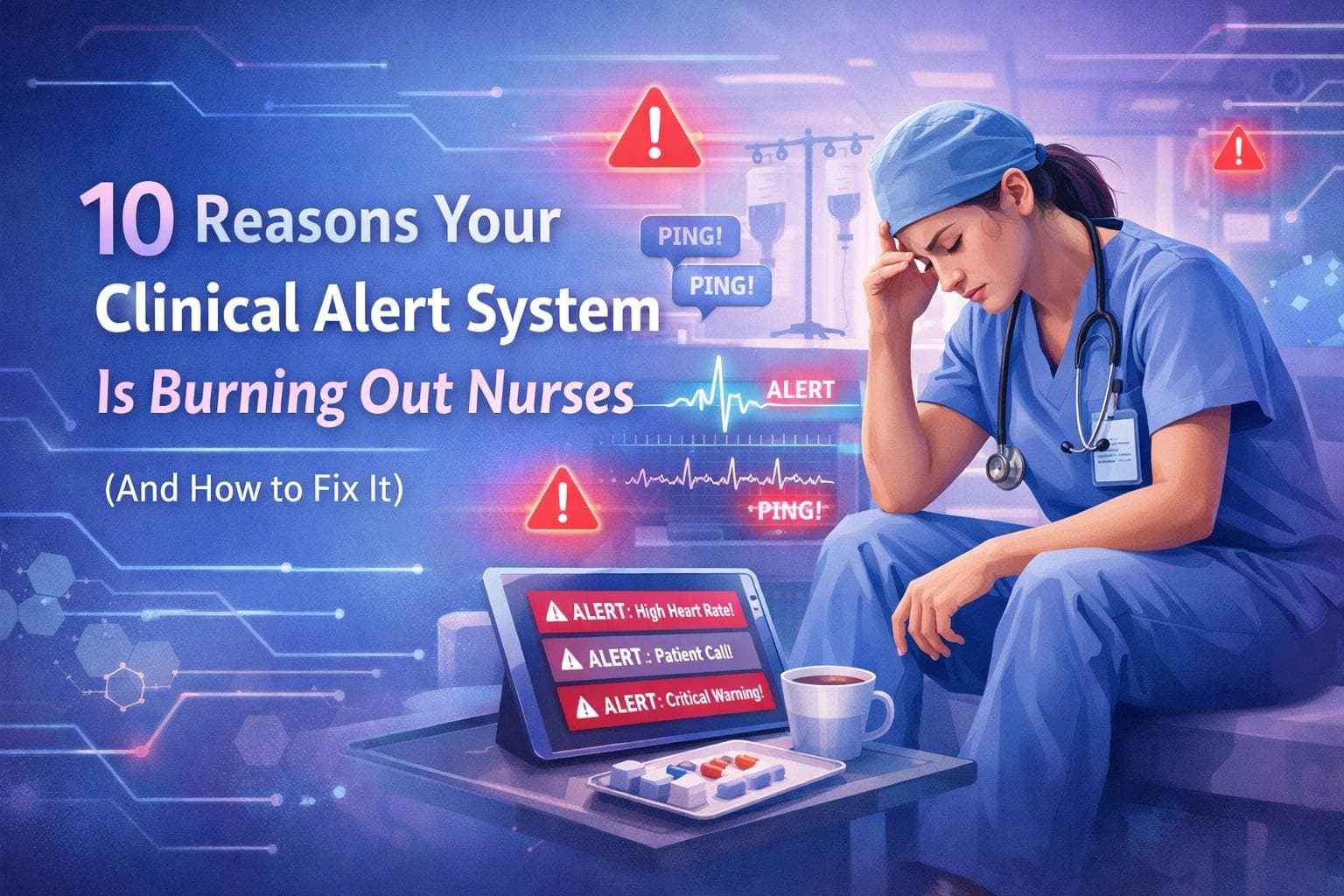
Picture this: A single ICU patient generates anywhere between 150 to 400 alarms during one nursing shift. Now here's the gut punch: 85 to 99% of those alarms are false or clinically insignificant.
That's not a communication system. That's a noise machine. And it's burning out your nurses..
Alarm fatigue isn't just an inconvenience. It's a patient safety crisis wrapped in a workforce retention problem. When nurses become desensitized to the constant barrage of alerts, they start missing the ones that actually matter. The result? Delayed responses, compromised care, and exhausted clinicians walking out the door.
Yet here's the thing: this isn't an unsolvable problem. With AI-assisted clinical communication and smarter system design, hospitals can transform their alert infrastructure from a source of stress into a genuine clinical asset. Let's break down exactly why your current system is failing and how to fix it.
Excessive Alarm Frequency Without Prioritization
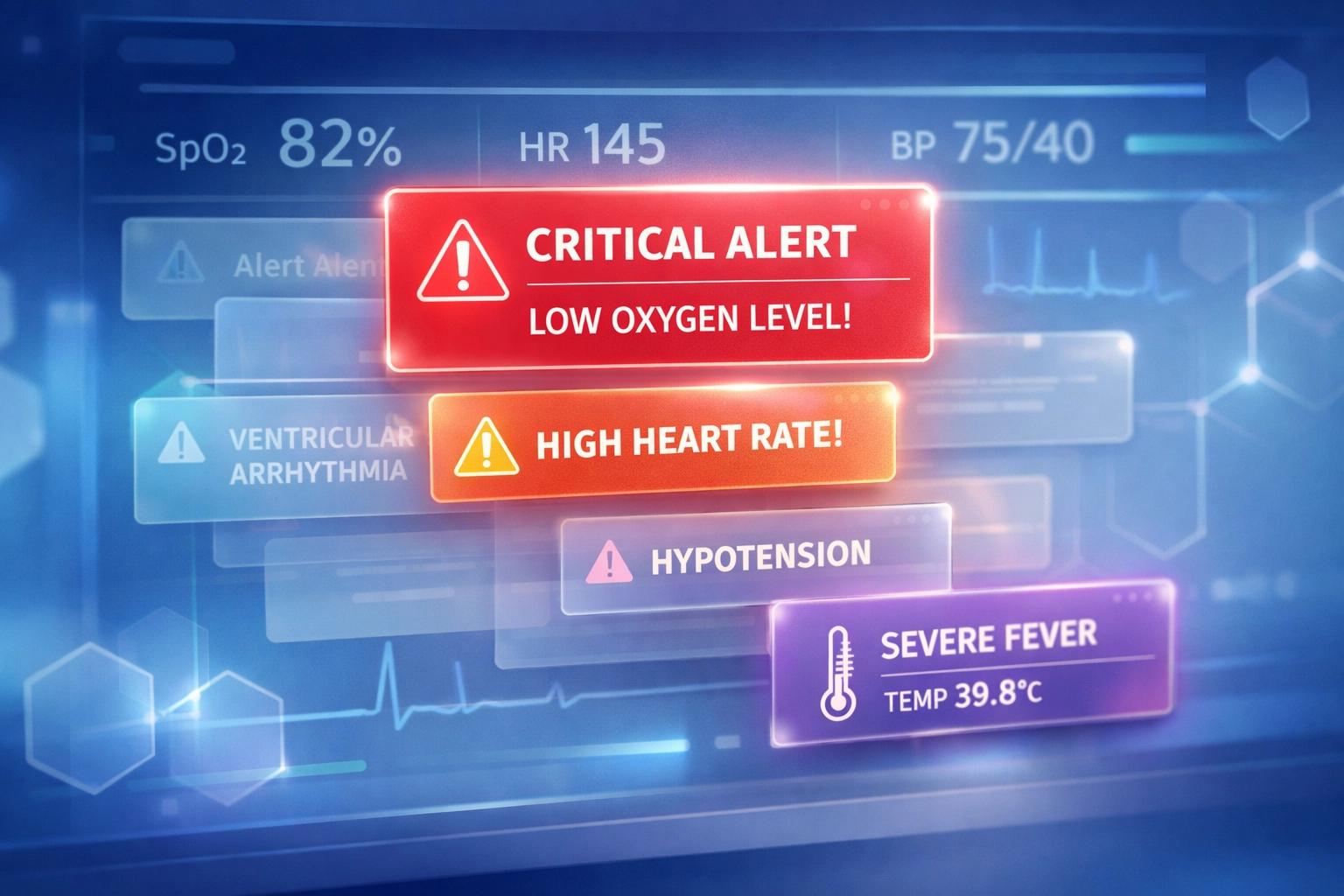
Traditional alert systems treat every notification like a five-alarm fire. A minor deviation in vitals gets the same treatment as a critical cardiac event. This high-volume, no-distinction approach overwhelms cognitive capacity and leaves nurses unable to discern what actually requires immediate response.
The Fix: Implement intelligent alarm customization that varies based on individual patient acuity and clinical context. AI-powered platforms can learn patient baselines and adjust alert thresholds dynamically: reducing noise while preserving critical notifications.
False and Non-Actionable Alarms
When the vast majority of alerts lack clinical significance, you're essentially training your nurses to ignore them. It's a dangerous conditioning that creates the exact opposite of what alert systems intend. Real emergencies get lost in the chaos.
The Fix: Leverage machine learning to filter and validate alerts before they reach clinical staff. Smart hospital communication solutions can analyze incoming data, cross-reference patient history, and suppress non-actionable notifications automatically.
Inadequate Staff Training on Alarm Systems
Many nurses receive minimal training on their facility's alert systems. They don't fully understand which alarms are truly actionable, how to customize settings, or when to escalate. This knowledge gap amplifies fatigue and delays response times.
The Fix: Establish formal training programs paired with intuitive technology. The best AI in hospital workflows doesn't require a PhD to operate: it should guide users with contextual prompts and straightforward interfaces that reduce the learning curve.
Poor Communication and Unclear Protocols
Who responds to which alarm? What's the escalation path when the primary nurse is occupied? Without crystal-clear protocols, confusion reigns. Alerts bounce around like a game of telephone, and critical information gets lost in translation.
The Fix: Develop explicit response protocols embedded directly into your communication platform. Modern systems can automatically route alerts to the right responder based on role, availability, and proximity: eliminating guesswork entirely.
Staffing Shortages Creating Impossible Ratios
Let's be honest: even the best alert system can't compensate for a nurse managing twice the patients they should. Staffing shortages force individual clinicians to handle more patients: and exponentially more alarms: simultaneously. Mental bandwidth evaporates.
The Fix: While technology can't hire nurses, it can reduce the cognitive load on the ones you have. **Improving nurse workflows with AI** means automating routine communications, consolidating notifications, and ensuring that every alert reaching a nurse is worth their attention.

Heavy Administrative Burden Pulling Nurses from Bedside
Documentation. Care coordination. Insurance callbacks. The administrative weight on nurses has never been heavier. Every minute spent on paperwork is a minute away from patients: and a minute where alarms pile up unattended.
The Fix: Streamline administrative workflows through integrated communication platforms that handle coordination automatically. Voice-to-text documentation, automated status updates, and centralized messaging reduce the clerical burden and keep nurses where they belong: at the bedside.
Interruptions During High-Priority Tasks
There's a special kind of stress that comes from an alarm blaring while you're in the middle of a critical procedure. These interruptions don't just break focus: they create decision-making paralysis and compound fatigue throughout a shift.
The Fix: Implement context-aware alert distribution. Intelligent systems can recognize when a nurse is engaged in a high-priority task and temporarily reroute non-critical notifications to available team members. It's not about silencing alerts: it's about delivering them to the right person at the right moment.
Poor Alarm Distribution and Assignment
When alert routing doesn't account for workload balance, some nurses drown while others barely notice a ripple. Improper bed alarm assignment within system workflows creates inequitable burden distribution that accelerates burnout for the unlucky few.
The Fix: Review and redesign alarm distribution mechanisms to ensure equitable assignment across the care team. AI-driven platforms can dynamically balance notification loads based on real-time workload assessment.

Lack of Team Coordination and Support
Nurses working in isolation: physically or digitally: struggle more with alarm fatigue. Without reliable backup, there's constant anxiety about missed alerts. That anxiety compounds into chronic stress and, eventually, burnout.
The Fix: Formalize team-based monitoring approaches. A "buddy system" where nurses covering adjacent assignments can see and respond to each other's alerts reduces individual pressure. Better yet, implement platforms that make cross-coverage seamless and automatic.
The Cumulative Effect of Multiple Stressors
Here's the reality: alarm fatigue doesn't exist in a vacuum. It layers on top of already demanding physical, emotional, and cognitive workloads. Each additional stressor compounds the others, creating a burnout spiral that's difficult to escape.
The Fix: Adopt comprehensive solutions that address multiple systemic issues simultaneously. Piecemeal interventions won't cut it. You need coordinated organizational action across technology, training, protocols, and staffing.
How Banyan Addresses the Root Causes
At Elixr Labs , we built Banyan specifically to tackle these challenges. Our platform has processed over 1 billion communication events across healthcare systems: and that scale has taught us exactly what works.
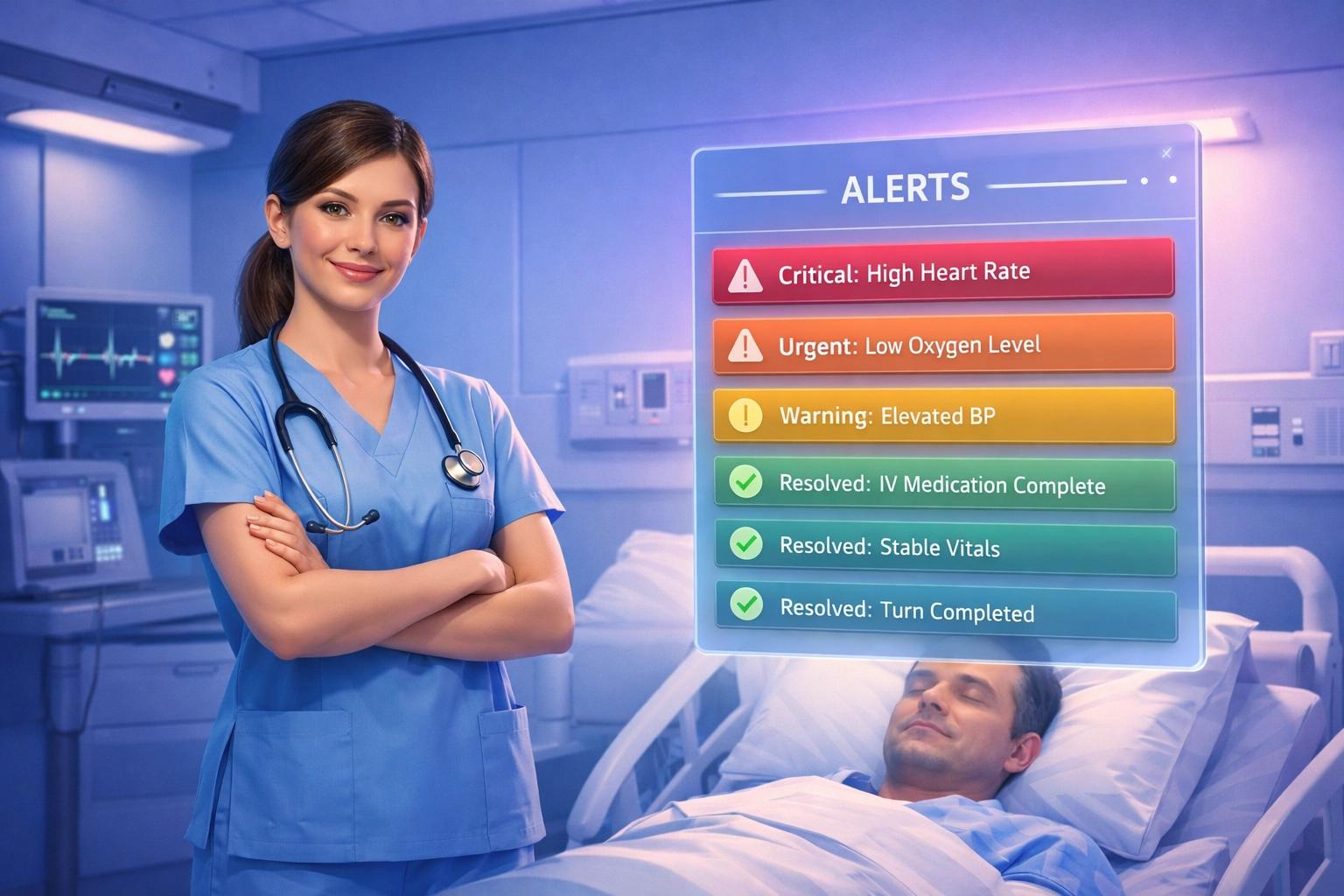
Banyan uses AI-assisted clinical communication to
- Intelligently prioritize alerts based on patient acuity, clinical context, and historical patterns
- Route notifications to the right responder automatically, accounting for role, availability, and workload
- Filter non-actionable alarms before they ever reach clinical staff
- Enable seamless team coordination so no nurse operates in isolation
- Reduce administrative burden through automated care coordination workflows
The result? Fewer interruptions. Smarter alerts. Nurses who can actually focus on patient care instead of fighting their communication tools.
The Path Forward
Nurse burnout isn't just a staffing problem: it's a systems problem. And systems problems require systems solutions.
Training matters. Clear protocols matter. Adequate staffing absolutely matters. But none of these interventions reach their full potential without the right technological foundation. Smart hospital communication solutions amplify every other improvement you make, creating sustainable change rather than temporary relief.
The question isn't whether your hospital can afford to modernize its clinical alert infrastructure. The question is whether you can afford not to: when every burned-out nurse who leaves takes institutional knowledge, patient relationships, and thousands in recruitment costs with them.
Your nurses deserve better. Your patients deserve better. And with the right approach to AI in hospital workflows, better is entirely within reach.
Ready to see how intelligent clinical communication can transform your hospital's alert system? [Learn more about our vision] for the future of healthcare technology.